Friday, March 25, 2022

My Cranky Last-Minute Oscar Post


 "It's Oscar time again. Pardon my asterisks, but I am completely out of f*cks to give."

That's how I opened my annual Oscar post five years ago.  And with each successive year, I have felt less and less enthusiasm for this annual pageant of the film industry's self-congratulation. In fact, I haven't even bothered to write an Oscar post since 2018.

It was not always thus. For most of my life - since the age of 11, in fact  - the Oscars have been to me what the Super Bowl is to die hard football fans. And while I still look forward to gathering with my friends - eating, drinking, and dishing the red carpet looks and awkward acceptance speeches - there is a very big part of me that just doesn't care anymore.  I don't know that my apathy is necessarily related to the pandemic, the war in Ukraine, the embarrassing spectacle of this week's Ketanji Jackson confirmation hearing... all the things that matter so much more. It's just that, with every passing year, it becomes more obvious to me that these awards have only an ephemeral and tenuous connection to enduring artistic achievement. 

And that's still true this year, even with a mournful, slow-moving three-hour Japanese film about grief and loss in the running for Best Picture (Drive My Car, which is beautiful, but demands your full attention. Carve out time on a rainy afternoon and stream in on HBO Max while you can.)

In truth, there are a number of worthy and wonderful films and performances on the ballot this year. But there are others that have been unfairly overlooked, not just by the Academy but by most other awards-giving organizations as well.

So here are my terribly important (and completely subjective) thoughts about who/what will win, who/what should win and who/what was the most unfairly overlooked:

Best Supporting Actress:

Will win: Ariana De Bose for West Side Story 

And I've got no problem with that. DeBose was a joy in a film I liked very much. This win will make history, with DeBose winning for the very same role for which Rita Moreno won the Oscar in 1962.

Should win: Ariana De Bose

Although Jessie Buckley was pretty damn good in The Lost Daughter.

Overlooked; Dakota Johnson for The Lost Daughter, Teresa Saponangelo for The Hand of God

Everyone loves Buckley and Olivia Colman, both terrific actresses who dazzle us in every performance. But Johnson is every bit their equal here, and I can't understand why she hasn't received the same awards love as her co-stars.

Saponangelo was the hilariously volatile mother in Paolo Sorrentino's Best International Film nominee. Frankly I'd like to give a special Oscar to every actor who played a member of the young protagonist's family; watching them was possibly my happiest experience in a movie theater in 2021.

Best Supporting Actor:

Will win; Troy Kotsur for CODA

There's been a groundswell for Kotsur in the weeks since the nominations were announced. He's not my first choice is this category, but I certainlhy won't be outraged if he wins. CODA deserves some Oscar love, and this is the most likely category in which to receive it.

Should win Kodi Smit-McPhee for The Power of the Dog


Smit-McPhee was, quite deservedly, the early front runner in this category. And he could still take home an Oscar this year. But I predict he'll be back before long. He's still quite young and already too good an actor not to be nominated again.

Overlooked: Toni Servillo for The Hand of God, Mark Rylance for Don't Look Up and Simon Helberg for Annette

Three of my favorite 2021 performances haven't received any nominations anywhere. So I'm going to sing their praises here and now.

Servillo is the cheerful, very funny father in the aforementioned Italian film.  A frequent player in the films of Paolo Sorrentino, he is always good - but especially so here.

Rylance's tech mogul manages to send up both Elon Musk and Mark Zuckerberg, yet feels like a very specific but wholly original characterization. He's not in the film much, but when he is, everything feels funnier and more inspired.

Almost no one saw Annette, and most of those who saw it weren't crazy about it. (I, however, loved it.) Still Helberg deserves recognition for being both hilarious and heartbreaking in a sung-through musical, playing the conductor who pines, mostly unrequitedly, for an opera singer (Marion Cottillard.)

Best Actress:

Will win: Jessica Chastain for The Eyes of Tammy Faye

Chastain is going to win, and I am here for it.  She found the the heart and humanity behind the false eyelashes and the startling facial prosthetics. The film is itself was nothing special, but Chastain was great.

Should win: I don't care...

Honestly, in this category it's more about who shouldn't win.

I'm fine with Chastain, Olivia Colman or Penelope Cruz walking off with an Oscar. Just please, God, do NOT let it be Kristen Stewart for that Godawful overrated Spencer. Nicole Kidman shouldn't be here either.

Overlooked:  Michelle Pfeiffer in French Exit

Lady Gaga in House of Gucci is the first and most painfully obvious choice here. Jennifer Hudson, who channeled the late, great Aretha Franklin to spectacular effect in Respect is another glaring omission. But I'm going to champion Pfeiffer, who has been killing it for the last few years, playing hilariously acerbic women in films that don't get enough attention. French Exit is a regrettably flawed adaptation of a very good novel in which Pfeffier's unfiltered, unsentimental, formerly rich widow is the powerful center around which all the other actors orbit.  It's worth seeking out on streaming, and if it works for you at all, it's because of Pfeiffer.

Best Actor

Will win: Will Smith in King Richard

I'm not sure how Smith is getting so much award love in a year which also gave us Benedict Cumberbatch's mesmerizing turn in The Power of the Dog, but Smith is the shoo-in here. A win for Smith feels more like an lifetime achievement/Mr. Congeniality award to me. But I'll admit, if grudgingly, that Smith is pretty damn good in this film.

Should win: Benedict Cumberbatch in The Power of the Dog


Here's what I wrote about Cumberbatch's performance after first seeing The Power of the Dog at the 2021 Chicago International Film Festival: "Cumberbatch is electrifying in every scene, always managing to suggest a vulnerability - or at least some unplumbed complexity - behind every wincingly nasty wisecrack. When I walked out of the theater that night, I was certain That I had seen the next Best Actor Oscar winner at work. But I had not.  This year is Will Smith's year.  And Cumberbatch very likely has more great work ahead of him.

Overlooked: Nicholas Cage for Pig

Critics seems to agree that Cage is phenomenally good in this odd but powerful indie film, and he's received many nominations for low-stakes critics' awards.  But even a single nomination for a major acting award has inexplicably eluded him. I'm mighty disappointed not to see the Oscar nomination that would have signaled the Nicholas Cage comeback. (Reminder: he already has one Oscar, for Leaving Las Vegas.)

Best Picture:

Will Win: CODA

In addition to the support building for Troy Kotsur, the film itself is gaining momentum for the top prize. I'm going out on a limb to predict that voters will find CODA to be the perfect heartwarming, life-affirming film for these troubled times.

Should Win: The Power of the Dog or Belfast
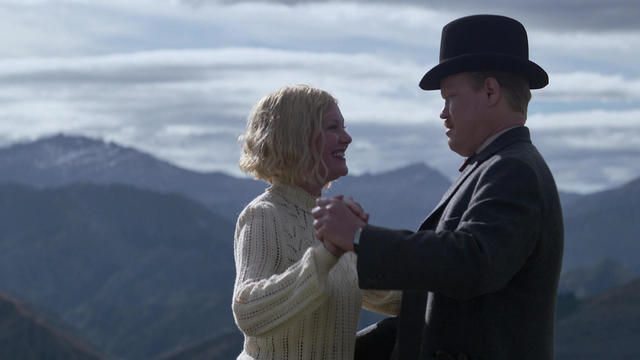
The Power of the Dog (my personal choice for Best Film of 2021) still may pull through to a victory. It's been the front runner in this category ever since the nominations were first announced. 


Belfast is not considered to be a serious contender; however, its blend of gentle comedy, feel-good reminisce and artfully evoked onset of 'the troubles' in Northern Ireland manages to be relatable both to the current state of the world and to our need for the reassurance of family ties.  I'm holding out a little hope for a surprise upset.

Overlooked:  Mass

The best film to be largely ignored by awards-giving bodies is probably the hardest to watch.  A meeting between the parents of a school shooter and the parents of his victim, it's written and acted to perfection. But it's grueling and sad.  In a perfect world, all four actors (Martha Plimpton, Jason Isaacs, Reed Birney and Ann Dowd) would have acting nominations, and Mass would have received nominations for Best Original Screenplay and Best Picture. But, of course, we don't live in a perfect world...

Thursday, February 3, 2022

Quick Take: Rifkin's Festival


I wasn't sure I was allowed to like Rifkin's Festival. For that matter, I'm not sure I was even supposed to watch it. These days, choosing to participate in the release of a Woody Allen film - whether by acting in it or just paying to see it - comes with a built-in moral dilemma. Whatever decision you make, it's somehow considered to reflect your belief about whether the director molested Dylan Farrow.

Frankly, Rifkin's Festival is too lightweight and inoffensive a film to bear that kind of moral weight. At it's best, it evokes the kind of longing and romantic preoccupations that characterized Allen's films of the '70s and '80s.

Mort Rifkin (Wallace Shawn) is a writer and former film studies professor married to a movie industry PR rep (Gina Gershon). He tags along with her to the San Sebastian film festival where she's preoccupied with the young, hot French film director whose PR she handles (Louis Garrel). Rifkin believes Garrel's new film is pretentious and overpraised; he also believes his wife may be having a affair with her client. Feeling a little queasy, he seeks out a doctor, Joanna Rojas (Elena Anaya), who shares his intense love of  classic European film and with whom he begins a rather sweet, wistful flirtation. And when Mort sleeps, his dreams are scenes from his favorite European films, but with his wife, friends and family members playing all the parts.

It's those dream sequences that make the film, skillful reproductions of famous moments from Breathless, 8 1/2, Jules and Jim, The Exterminating Angel and others, but tweaked and played for laughs. The 8 1/2 parody is every bit as visually sumptuous and exciting as the corresponding scene in Fellini's masterwork, and a parody of  Bergman's Persona  - with Gershon and Anaya in tortured, overlapping extreme close-up -  made me laugh out loud twice in the space of about 20 seconds. (It's every bit as funny as the corresponding Persona parody played by Diane Keaton and Jessica Harper in Love and Death, yet the premise is completely different.). 

Shawn is particularly good here, playing what is essentially a stand-in for Allen himself - or at least, the characters Allen used to play. There's more warmth and yearning in his performance than there is neurosis; he makes a potentially very annoying character into a likable and sympathetic man. He and Anaya establish a lovely chemistry that had me seriously rooting for them to wind up together. And the beautiful shots of San Sebastian, Spain only add to the romantic vibe - more great work from cinematographer Vittorio Storaro.

So that's the best of Rifkin's Festival. At its worst... well, its disappointments are pretty much the same as those in most of Allen's decreasingly satisfying recent work.  Too often, the dialogue feels as though it came from a rough draft rather than a finished script, with actors delivering large chunks of plot exposition as if giving junior high book reports on the situations they're portraying. (Douglas McGrath's delivery of the doctor's back story is a particularly glaring example). And even though his characters have cell phones, Allen still hasn't figured out how they actually work. When Shawn asks McGrath for the doctor's home phone number - even though both men are clutching their phones at that moment- McGrath fumbles for a pen and piece of paper to write the number down.)

And that moment with the confusion over the cell phones isn't the only scene in Rifkin's Festival that feels like it was written by your out-of-touch, politically incorrect grandpa. There are throwaway moments here and there that made me cringe a little. (In one, a very attractive young woman - we'd have called her a 'starlet' back in the day - is offered the role of Hannah Arendt by a lascivious film producer. It doesn't play well on this side of the Me Too movement, even though Allen's intentions are benign.)  However, I'm not inclined to quibble over the occasional moments of outdated humor. At 86, Allen is still managing to crank out a movie a year, which is a remarkable thing. He may not have another Annie Hall or Crimes and Misdemeanors in him. But if we can get a few more Rifkin's Festivals, I won't complain.

Sunday, January 16, 2022

2021 in Review: These are Not the Best Films of 2021 (or are they?)


This is the final post in a series looking back at film and television in the past year. Previous entries in this series can be found here, here and here.

Before we get to this year's list, a couple of standard disclaimers:

Why is this list called "NOT the best films of 2021"?

Because, as my blog title proclaims, I am a PART-TIME cinephile. I am not a professional film critic, just a cinema-loving civilian, so to speak. I don't prioritize seeing every single movie out there to the exclusion of time spent with friends, family or other interests. If a particular film doesn't appeal to me at all, I feel no compulsion to follow critics' recommendations to see it. (And when I do, I frequently regret it. Last week, I watched the Palme D'or-winning Titane, a movie that takes the cinematic "body horror" genre to a whole new level of gory depravity. It can't even tell you how badly I want those two hours of my life back.)

Not that I didn't make a solid effort: I saw 104 of the films that were released last year, and that's a personal record of which I'm ridiculously proud. But it's still only about half of what a professional film critic would see in any given year, and I never got around to a number of the year's best reviewed titles. (These would include The Green Knight; Cry Macho; The Disciple; This is Not a Burial, It's a Resurrection, Zola and Red Rocket.)  A few others (Drive My Car, Memoria, The Souvenir Part 2) had only brief, late-December runs at arthouse theaters in Chicago neighborhoods I no longer visit after dark. (Or during daylight hours, for that matter. Google "Chicago crime rates" to learn more.)

Which brings us to the second standard disclaimer on my year-end posts:

The eligibility requirement for consideration on my list is that the film must have entered general release in the Chicago area during the calendar year of 2021. (Film festival screenings alone don't count.) This means that some films generally considered to be from 2020 were considered for my 2021 list.  (among them Nomadland, The Father, Promising Young Woman, The United States vs. Billie Holliday) It also means that some 2021 films, which either opened here just this week or are yet to arrive (Parallel Mothers, Flee, Petite Maman, Cyrano, The Worst Person in the World) will be considered for my 2022 list.

And there is yet another disclaimer that I haven't applied before. It's been a very emotional year for me. I inherited my deep love of movies from my father who passed away in 2020, and I've felt his loss even more acutely this year, especially as I've watched so many movies he loved - or would have loved, if he'd lived to see them. As I'll explain in some of my capsule reviews, I've found it difficult to sit back and look at films with a cool, critical eye this year. I've chosen a fair number of my favorites based on my intense emotional reactions alone.

In spite of all that, however, I think you'll find that the list below doesn't look all that different from most professional critics' "Best of 2021" selections. So perhaps, despite my limitations and periodic laziness, these really are the best movies of the previous year.

I've included 'where to stream' information for all ten entries; "Available to rent on the usual platforms" is shorthand for 'Amazon, Apple, Google Play, Redbox and Vudu.'

In reverse order of preference:

Pig (directed by Michael Sarnoski)

I haven't seen a Nicholas Cage film in years (hyper-violent schlock doesn't much appeal to me). And when I heard that Cage was a playing a disheveled hermit whose life comes apart when his beloved pet pig is stolen, I can't say I was eager to end my long run of Cage abstinence.  But the respectful, even rapturous, reviews for Pig piqued my curiosity, and I have to say, those reviewers were correct. Cage's performance is superbly measured, suffused with melancholy and tightly controlled anger. Not just any actor  - let alone one whose character is unshaven, unwashed, dressed in rags and bleeding profusely from multiple face wounds -  can convincingly summon the quiet moral authority to shame and intimidate a celebrated chef in his own restaurant. Have I piqued your curiosity now?

Pig is available to stream on Hulu with a subscription or to rent on the usual platforms.


The Last Duel (directed by Ridley Scott)


Ridley Scott made two movies this year; House of Gucci may have brought in more box office receipts, but this is the better film.  The setting is 14th century France.  Matt Damon and Adam Driver are knights (or squires? I'm still a little fuzzy on their titles.) Damon is a bit of a doofus whose loses the king's respect, but still manages to marry a beautiful woman with a sizable dowry (Jodie Comer). Driver, the far savvier member of the court, parties with the apparent Hugh Hefner of the 14th century French nobility (an unrecognizably blond Ben Affleck, providing comic relief), but yearns for Damon's wife. So while Damon is away, Driver stops by his estate and basically helps himself to Comer. Was she raped? We get three versions of the story - one each from Damon's, Driver's and Comer's point of view. This conceit works remarkably well, with subtle as well as obvious differences in nuance and inflection in each telling. Much as I hate to employ cliches, I truly was on the edge of my seat as that last duel was fought to determine Driver's guilt or innocence (because, especially in those days, a woman’s testimony counted for nothing.) Medieval history meets the Me Too movement, with a particularly fine script by Damon, Affleck and Nicole Holofcener. 

The Last Duel is available to stream on HBO platforms with a subscription or to rent on the usual platforms.

Mass (directed by Fran Kranz)


Probably the hardest to watch of any film on this list, but the writing and acting are so exceptional that it's worth the effort. In a church basement, two couples meet to talk. One couple are the parents of a boy killed in a school shooting; the other are the parents of the shooter.  The conversation is tense, emotional - and ultimately breaks through to forgiveness and shared sorrow, well befitting its church setting even though God is never directly invoked.  The actors - Ann Dowd, Martha Plimpton, Jason Isaacs and Reed Birney - all do stunning, exceptional work. Mass will leave you emotionally shredded, but also awed by what it achieves.

Mass is available to rent on the usual platforms.

The Hand of God (directed by Paolo Sorrentino)


You can read my rapturous review from the Chicago International Film Festival here. I don't have much more to say, except to confirm my love for this film, even without the big screen experience. I've since re-watched in on Netflix and it held up beautifully. I particularly love Sorrentino's incarnation of his own family - their humor, their naughtiness and obvious love for one another other are a joy to witness.

The Hand of God  is available to stream only on Netflix with a subscription.

Annette (directed by Leos Carax)


No one has a lukewarm reaction to Annette. You either give yourself over fully to its surreal, grand operatic styling or you declare it irredeemably bonkers and turn it off in disgust. Obviously, I'm in the first camp, but even I can admit that it may be the year's weirdest movie. (Even considering that it lost the top prize at Cannes to the story of a young woman who has sex with a car and ends up pregnant. See my disdain for Titane expressed above.) Adam Driver and Marion Cotillard play, respectively, an iconoclastic stand-up comic and a opera singer who fall in love and have a baby (the titular Annette) who is played by an animated puppet. Simon Helberg (best known as Howard from The Big Bang Theory) has a very affecting supporting role as the orchestra conductor who yearns for Cottilard. If I didn't tip you off sufficiently with the above reference to grand opera, this is an entirely sung-through musical with a few infectious, memorable tunes, but mostly just dialogue sung as recitative. (The opening number, May We Now Start,  had damn well better get a Best Song Oscar nomination.)  Annette has a little to say about say about toxic masculinity, and a little more to say about parents who use their children to fulfill their own needs without ever seeing them for who they really are. But, mostly, it's just consumed with its own crazy/glorious vision.

Annette is available to stream only on Amazon Prime Video with a subscription.

West Side Story (directed by Steven Spielberg)


I have found it impossible to process my feelings about this film in any kind of intellectual terms. My reaction to West Side Story is purely emotional. This is the first of two films on this list which brought me to tears, repeatedly, without me being able to fully understand why I was crying. Sometimes I think it was just because I’d forgotten how beautiful that Leonard Bernstein score really was. But in other scenes, I felt my heart swelling with joy (most notably during the America number, which in this version spills out into the streets and ultimately gets the whole neighborhood dancing.) I know as a critic, I'm supposed to to put my emotions aside and look carefully and analytically at whether the revisions made by Spielberg and screenwriter Tony Kushner actually make sense or enhance the original musical in any important way. I can’t do that with a cool eye, but my heart tells me they succeeded.

West Side Story is not yet available on streaming. A streaming release date has not yet been announced.

Licorice Pizza (directed by Paul Thomas Anderson)


To quote my own thoughts from my previous post (re: the French film One Sings, the Other Doesn't): "Sometimes the best recommendation for a film is that its characters are just fun to hang out with." That's definitely the appeal of Licorice Pizza. Its cast is headed up by two fine young actors; both are charming and instantly likable, but neither is intimidatingly beautiful. They look and act like people you might actually know. Cooper Hoffman (son of the late Phillip Seymour Hoffman) and Alana Haim stumble through a year or so of adventures and misadventures around the fringes of the early 70s Hollywood scene.  There's not much plot to speak of, just an amiable rambling from experience to experience. There are fun cameos from Sean Penn and Christine Ebersole as barely fictionalized versions of William Holden and Lucille Ball respectively, plus a screamingly funny one from Bradley Cooper as hairdresser-turned-producer Jon Peters. Only in this case, Peters' identity is in no way camouflaged.  This week, Bradley Cooper told Stephen Colbert that Jon Peters made it possible for him to finance his version of A Star is Born by deferring his own fee. (Peters had been a producer on the Barbra Streisand version.) I wonder how he feels about seeing Cooper portray him as angry macho dickhead who seduces women by offering to make them peanut butter sandwiches.

Licorice Pizza is not yet available on streaming. A streaming release date has not yet been announced.

Nomadland (directed by Chloe Zhao)


This is a sad story. But when I remember the film, it's not the sadness I think about, but rather its beauty. The gorgeous musical score and the breathtaking cinematography that takes in so many natural wonders of the western United States. The sense of community that develops between the modern-day nomads who have lost their homes and live out of their vans and trucks, while eking out meager livings from temporary service jobs.  Many of the characters in the film are real-life nomads who are profiled in the non-fiction book on which it is based. I've not read the book myself, but people who have read it assure me that their actual lives are a good deal more dire and hardscrabble than the film version fully depicts. Still, I respect Chloe Zhao for finding something transcendent in the lives of people whose hardships we barely know. She turns the story into visual poetry, anchored by a reliably brilliant performance by Frances McDormand.

Nomadland is available to stream on Hulu with a subscription or to rent on the usual platforms.


Belfast (directed by Kenneth Branagh)


Here is the second film on this list to have brought me to tears, repeatedly. Belfast is a lot of things, all at once, seamlessly interwoven with one another: a child's-eye version of life in a Belfast neighborhood at the start of The Troubles; a warm-hearted, autobiographical reminiscence of family life; and (least predictably) a window into a film director's earliest formative influences. (In Branagh's case, they range from John Ford westerns to Chitty Chitty Bang Bang.) It's shot in impeccable black-and-white by cinematographer Haris Zambarloukos and acted to perfection by a cast including Judi Dench, Ciaran Ciaran Hinds, Jamie Dornan and Outlander's Caitriona Balfe. It's sweet and sentimental, but never cloying. As with West Side Story, I find it nearly impossible to convey my appreciation of this beautiful film in intellectual terms alone; it, too, worked its magic directly on my heart.

Belfast is available to rent on the usual platforms. (However, as of 1/16, premium pricing is still in effect which means a two-day rental will run you $19.99.)

The Power of the Dog (directed by Jane Campion)

Until just a few days ago, The Power of the Dog was bouncing between second and third place on this list. Then I decided I to watch it a second time on Netflix. (I'd previously seen it on a big screen at the Chicago International film festival, as I wrote about here.) 

When I re-watch a movie - even one I really love - it's no big deal to me to hit "pause" now and then so I can go to the kitchen to make a cup of tea or fix a snack. I might even return a text or read a quick email every so often. It's not like I don't know what's gong to happen next.

But, even though I wanted to do some of those things during The Power of the Dog, I simply could not will myself to divert my attention for one millisecond.  I was too completely absorbed in every fine detail of the performances, the dialogue, the cinematography. Where my initial experience of the film was mainly about being blown away by Benedict Cumberbatch, this time I took special note of the fine, nuanced work of Kodi Smit-McPhee and Jesse Plemons. Because I already knew how the film would end, I was able to watch closely for the clues to that final, heart-stopping twist that were carefully sprinkled throughout its final chapter. It was the most rewarding second viewing of a film I can remember, and it pushed Jane Campion's magnificent psychological thriller/Western into the number one slot. Definitely the year's best film - and many 'real' critics agree!

The Power of the Dog is available to stream only on Netflix with a subscription.

A few more thoughts:

Honorable Mention: CODA, Dune, The Father, Lamb, Preparations to Be Together for an Unknown Period of Time, Promising Young Woman, Quo Vadis Aida?, Supernova, Undine

2021 Nominees to the Academy of the Overrated: Titane, Spencer, The Card Counter*

(* The Card Counter was demoted from Honorable Mention last night after I watched director Paul Schrader's 1992 film Light Sleeper, which is pretty much the same movie, just set in the world of drug dealing instead of casino gambling. I had to deduct points for self-plagiarism.)

Sunday, January 9, 2022

2021 in Review: The Best "Not New but New to Me" Movies I Watched


This is the third in a series of posts looking back on the past year in film in television.

I retired from my corporate job on December 31, 2020, in the midst of both an icy winter and the second wave of a global pandemic.  As a result, I was stuck at home with no pressing commitments during daylight hours and a very long list of classic films on my "to see" list.  Take a wild guess how I spent my time...

I watched 274 movies in 2021: 98 of these were new 2021 releases, 34 were repeat viewings of old favorites, and the remaining 142 films were pre-2021 movies I was seeing for the first time.  What follows are a list of my favorites of those discoveries - not necessarily the best of them, but those I found most memorable and that I'd watch again in a heartbeat.

In no particular order:

Unfaithfully Yours (1948; dir. Preston Sturges)


I took full advantage of the Criterion Channel's library of Preston Sturges comedy classics in early 2021.  Most I had seen before (albeit sometimes as long as forty years ago), but  Unfaithfully Yours had eluded me for years.  

My takeaway from all those Sturges films, especially this one, is how delightfully racy and adult they manage to be, even when governed by the rigors of a notoriously puritanical production code.  Unfaithfully Yours kicks off with a famous orchestra conductor (Rex Harrison) arriving home from a European tour. He's greeted at the airport by a rather large coterie of friends, but the only person he really wants to see is his wife (Linda Darnell); it's painfully obvious that he can't wait to get her in the sack.  When he finally extricates himself and Darnell from the crowd, Sturges immediately cuts to a scene of the two of them hastily tying on dressing gowns, having just arisen from a rumpled, shared bed. (They're not actually shown in the bed, that's how Sturges got away with it.)

I'd forgotten - or, more likely, never really knew - what a skillful and delightful comic actor Rex Harrison could be.  There's a whole fantasy sequence in the film's middle where Harrison imagines murdering the wife he thinks is cheating on him, along with the suspected lover. It's followed by a series of mishaps when he actually tries to actually carry out the fantasized plan. Harrison is brilliant in both.

The 1986 remake, with Dudley Moore in the Harrison role, isn't really as bad as critics claimed. But, not surprisingly, this original film is the gold standard.

The New World (2005; dir. Terrence Malick)


The gorgeous cinematography and the impressionistic emphasis on imagery over straightforward narrative is entirely to be expected from a Terence Malick film. What's unique and especially notable in this historical drama about the  romance of John Smith and Pocahontas is that most of the story is told from Pocahontas' point of view.  Colin Farrell and Q'orianka Kichler (who more recently appeared on the television series Yellowstone) play the legendary lovers, but their story is not nearly the romance of legend. Pocahontas is banished from her tribe, Smith chooses to go an expedition to the East Indies and leaves her behind.  What follows is a sometimes painful exploration of her assimilation into white European culture before finding another love and reconciling the disparate societies in which she has lived.  I really can't believe it took me so long to get to this film; it is superb.

La Piscine (1969; dir. Jacques Deray)


I watched this during the languid, sweltering final days of the summer when it was too hot to be outside but too soon to think about donning sweaters or carving pumpkins. Turns out, that was the perfect moment to appreciate its sensual pleasures. Often called 'the most stylish French film ever made," La Piscine wraps the loosest of plots around its visual delights. Chief among these is the vicarious thrill of watching gorgeous people in skimpy bathing suits languish around the pool at a luxurious vacation villa. Alain Delon and Romy Schneider, two of the most beautiful actors in European cinema (and former offscreen lovers) play host to one of Schneider's former lovers and his gangly daughter (Jane Birkin). There's sex, heartache, betrayal and intrigue - but also scenic coastline drives, Henri Courreges couture, and sumptuous poolside breakfasts. In a pandemic summer when our travel options were severely limited, this was a particularly welcome escape.

Jesus of Montreal (1989; dir. Denys Arcand)


A group of French-Canadian actors mount a outdoor production of the Passion that attracts large audiences but challenges and angers the local Catholic hierarchy. Meanwhile, the actors' lives begin to conform to the storylines of their characters, particularly the actor playing Jesus (Lothaire Bluteau, also known for his role as a Jesuit priest in a later Canadian film, Black Robe). I've always liked films or books that present fresh perspectives on the Gospels, and I found this one thoroughly engrossing, with modern allegorical takes on familiar New Testament stories that were illuminating and respectful. Interesting that writer/director Denys Arcand is a lapsed Catholic turned atheist; I wouldn't have guessed that after seeing his film.

Birth (2004; dir. Jonathan Glazer)


One of the weirdest movies I've ever seen, but unaccountably mesmerizing. Nicole Kidman plays a  widow who's about to remarry. A young boy who lives in her building shows up out of nowhere at a party in her home, claiming to be the reincarnation of her late husband.  There's a terrific extended scene of Kidman attending the opera with her fiancé which consists entirely of her in a tight close-up as she struggles to get her mind around the idea that the boy may actually be her husband. You have to see to believe it, but Kidman pulls it off beautifully. It may be the single greatest piece of acting she's ever committed to film.  There's a trancelike vibe to this film that pulls you in from the very first scene and seduces you into accepting its bizarre premise. It's like walking into someone else's dream.

Army of Shadows ( 1969; dir. Jean Pierre Melville)

Melville's tribute to the WWII French Resistance is a film about heroes that feels entirely non-heroic.  Lino Venturo plays the Nazi's most wanted Resistance fighter, but he looks and acts like a middle-aged accountant who nonchalantly signed on to a covert operation. He's almost Monty Pythone-sque at times, particularly in one sequence where he parachutes into enemy territory having no prior experience with skydiving but no discernible concern over what he's about to do.  He just gets on with it.  There are still a few nerve-shattering moments of suspense, and a fine performance by Simone Signoret as a fellow Resistance fighter, but the understated, almost detached tone of the film has the strange effect of making its characters' exploits even more honorable.

One Sings, the Other Doesn't (1977; dir. Agnes Varda)


The 1970s saw an outpouring of films about female friendship, several of which I watched in the past year, including Claudia Weill's Girlfriends and Jacque Rivette's surreal, epic-length Celine and Julie Go Boating. But I have a special fondness for this film. Although it's not among Varda's most acclaimed work, it has a pleasant, rambling vibe and highly likable performance by Valerie Mairesse as a feisty singing feminist. Her friendship with a more traditional wife and mother (Therese Liotard) is the focus of a story that underscores its subtle political points with music, humor and affection. Sometimes the best recommendation for a film is that the actors/characters are just fun to 'hang out' with. This is one of those films.

Fedora (1979; dir. Billy Wilder)

Wilder's penultimate film is a bit of a call back to his earlier classic, Sunset Boulevard. It takes awhile to find its groove; the initial scenes are uncomfortably stilted, which I think is partly attributable to the source material. (It's based on a section of Tom Tyron's Crowned Heads, a novel I found clunky and unreadable, even as a teenager.) William Holden goes in search of answers when a revered, aging film star is found dead; the story that evolves is weird, shocking - even grotesque- but ultimately tragic. The tone is more elegiac than sardonic. It's shot through with a weary sadness, as if Wilder were subtly acknowledging that the film industry as portrayed here is passing into permanent oblivion.

The Running Jumping and Standing Still Film ( 1959; dir. Richard Lester)


A delightfully daft little film - just under eleven minutes long - conceived by Peter Sellers and directed by Richard Lester (billed as Dick) just a few years before his career took off with A Hard Day's Night and other classics of swinging 60s Britain. I discovered it on the Criterion Channel around the anniversary of my father's death (that's significant because my father was a diehard Peter Sellers fan; I watched a  lot of Sellers' films that week just to feel close to Dad again.)  It's just a series of absurd comic sketches starring Sellers, Spike Milligan and a few other British actors. It's very, very funny - and shows clearly the lasting influence that Sellers and Milligan would have on Monty Python and other British comics. You can watch the whole thing here for free.

Monday, January 3, 2022

2021 In Review: Not the Best TV/Streaming Series of the Year


This is the second in a series of posts looking back on the past year in film and television

For the last eight years, I've been publishing my list of the year's best films under the self-deprecating moniker of "NOT the year's best films." This year, I've decided to qualify my list of the best television/streaming programming in the same cautionary way.

Frankly, I don't know how it's is possible for ANY one writer to definitively name the best television/streaming experiences of a given year, because it can't be possible for any single person to actually SEE enough of them to make that determination.  With the ever-proliferating amount of programming available through the airwaves and in cyberspace, how can any individual person cram it all in within the space of 365 days?  

My tastes ran counter to audience and critical perceptions in many cases. I tried, but could not get on board with Mare of Easttown, The Great, The Other Two or Dickinson, to name but a few. I never got around to SO many other popular shows or series that friends recommended; the unseen series include, but are not limited to: Squid Game, Yellowstone, Insecure, Call the Midwife... the list goes on and on...

As always, there are some eccentric choices here, and some you may not have heard of, but I hope I can convince you to seek some of them out.  There are a few honorable mentions - and dishonorable mentions as well - following this list.

In reverse order of preference:

10. The United States of Al (CBS)

In which an Afghan man, Al, moves to Columbus, Ohio to live with the family of a combat veteran he befriended while serving as interpreter for the US Marines.  It's asking a lot for a standard American sitcom to provide laughs within story lines about PTSD and the many controversies surrounding the US occupation of (and ill-timed exit from) Afghanistan. I'm continually surprised at how deftly and delicately this show handles the required shifts in tone.  Adhir Kalyan's Al has an appealing sweetness that thankfully stops short of outright naivete.  The humor is gentle, goofy and seldom brilliant, but the show's ability to balance difficult subject matter with earned laughs is something to cherish.

9. Women Make Film (Turner Classic Movies/Criterion Channel)


The structure of this documentary series is as unpredictable and iconoclastic as its creator, the film critic and scholar, Mark Cousins. Subtitled "A New Road Movie through Cinema," it includes a number of actresses (among them Tilda Swinton, Jane Fonda, Debra Winger and Thandie Newton) who are shown driving various vehicles down deserted roads while providing introductory narration to clips from the work of probably every woman who ever sat in a director's chair (183 directors in all). It's an almost 15-hour journey, loosely organized into 42 sections (with titles like "Tone," "Believability," "Meet Cute," "Bodies," and "Song and Dance") and it's best enjoyed over gradually over several days. A binge would probably be the cinematic equivalent of eating yourself into a coma.  In all honesty, it's probably a bit too much for casual film fans. But serious cinephiles will gobble it up, and then go looking for the full versions of all the featured films.

8. Pretend It's a City (Netflix)


I recall getting my hands on Fran Lebowitz's  first book, Metropolitan Life when I was around 18; she was acerbic and sophisticated in a way I desperately wanted to be, but secretly knew I never could. Lebowitz isn't to everyone's taste, but - like her good friend Martin Scorsese, who produced this series - I still find her curmudgeonly commentary to be absolutely hilarious.  Here she lets loose on everything and everyone, although her main subject is how New York City has changed for the worse since she first escaped there from her New Jersey hometown in the early 1970s. Lebowitz, who no longer writes, tells great stories from a bygone era that she seems to miss even more than she lets on. I think you must have spent significant time in NYC to fully appreciate this series. (I haven't; I've made 7 short trips there in the last 18 years, but had no experience of the city prior to 2004.) Nevertheless, I enjoyed her cranky commentary, especially her disdain for people who don't look where they're walking (an experience which is not unique to her city.)  If Fran's humor is your kind of humor, this a very enjoyable way to spend about 3 hours.

7. The Kominsky Method, Season 3 (Netflix)


The final season of Chuck Lorre's buddy comedy is down by one buddy, opening with the funeral of Alan Arkin's character - after which his client/best friend (Michael Douglas) learns that he is the executor of Arkin's estate. The season arc shows him dealing with Arkin's greedy offspring and enjoying an unexpected career resurgence. But the greatest joy of these final episodes is the appearance of Kathleen Turner, Douglas' frequent 80s co-star, as the ex-wife who comes back into his life. Turner and Douglas have such enjoyable chemistry whether sparring or surrendering their defenses to become friends. Seeing these two actors together again adds a bittersweet layer of nostalgia that makes this last season seem even better than it probably is.

6. Stanley Tucci: Searching for Italy (CNN/HBO Max)


How many of us made it through some of the coldest, darkest days of the pandemic lockdown by vicariously traipsing though Italy and a delectable series of culinary adventures with the impeccable,  urbane Stanley Tucci as our guide?  (And how many of us winced a little when he took off his mask to get up close with cheesemakers and chefs to taste their wares? ) I'm sure I'm not the only one who created a post-COVID bucket list after watching this; mine is topped by that pasta with fried zucchini  that Tucci learned how to make from a chef on the Amalfi coast. Food porn and travel porn at their absolute best.

5. Hacks (HBO Max)


Generational clash comedy, smartly written and played. The brilliantly funny Jean Smart plays a Joan Rivers-esque comedienne whose Vegas career is winding down; a deadpan millennial (comic Hannah Einbinder) is called in to help her write new material.  They clash - repeatedly - but find their way to a productive and cooperative partnership over the course of ten episodes. This story arc may sound predictable, but a synopsis doesn't account for the delights of their chemistry, the unexpected complications in the deployment of Smart's backstory, or the surprising layers and subtlety of Einbinder's work. The women's performances ultimately fit together like (for want of a better cliché) a hand in a custom-made glove. HBO has ordered a second season; I'm looking eagerly forward to it.

4. The Handmaid's Tale, Season 4 (Hulu)


The Handmaid's Tale began, back in 2017, as a brilliant, visually stunning adaptation of Margaret Atwood's chilling dystopian novel. It then proceeded to lose credibility and strain its audience's patience over the next two seasons, losing sight of Atwood's carefully plotted logic and devolving into recurring torture porn. (Also Elizabeth Moss' June got away with a stunning series of crimes, but inexplicably evaded punishment every time.) Frankly, this season opens in the same sensationalistic mode, but quickly finds it footing when June finally gets over the border to Canada and starts processing her grief and trauma along with prior escapees. This season delves into the realities of post-traumatic stress with unflinching authenticity; June is unable to connect with her husband and undone by even a trip to the supermarket.(In a memorable scene, she stops transfixed in the potato chip aisle, unable to even comprehend the variety of chip flavors she has to choose from. After years of living on adrenaline while fighting for her daughters and her own life, it’s the mundane tasks of regular daily life that prove impossible.)  The season winds up in a bloody but satisfyingly cathartic finale. Hulu has purchased the rights to Atwood's own sequel, The Testaments; it remains to be seen if that novel will be incorporated into the final season of The Handmaid's Tale or becomes its own series. Either way, the seeds of that sequel's plot have been cleverly sown in this season.

3. The White Lotus (HBO Max)


Director Mike White has worked steadily to perfect his specialty - cringe comedies that spoof  the privileged classes  - through his earlier HBO series Enlightenment and the films Beatriz at Dinner and Brad's Status. This is his wildest and most barbed satire yet. The interactions between the moneyed guests at a posh Hawaiian resort and its overworked, underappreciated staff are often painfully funny, but sometimes just painful. There's a skillfully delivered blend of outrageous hijinks and honest heartbreak throughout. Standout performers are Murray Bartlett (the guest services manager who progresses from smooth, professional calm to a manic, drug-addled revenge seeker over the course of six episodes) and Jennifer Coolidge as a pathologically needy guest.

2. Only Murders in the Building (Hulu)


I love Steve Martin and Martin Short individually, but together they can be a little too precious. (I'm not a fan of their self-indulgent, two-man traveling stage show, which I've actually seen live). So I'm happy to report that this Hulu series exceedingly surpassed all my expectations. Short, Martin, and Selena Gomez (their unlikely, but effectively deadpan co-star) are all residents of a New York apartment building in which a murder occurs. They form an unlikely alliance to solve the crime, and Short creates a true crime podcast based on their investigations. That both Short's and Martin's character are washed-up, struggling showbiz types adds some poignancy and wistful humor to their storylines, as does Martin's tentative romance with a musician played by Amy Ryan. I could tell you so much more, but I think it's best to go into this show cold. Let me assure you, you will be dazzled by 75-year-old Steve Martin's still impressive physical comedy skills in the final episode.  

1. Ted Lasso (Apple)


This summary is the toughest of all to write, because what else is there to say about this most delightful of series that hasn't already been said? I came late to Ted Lasso, only getting to Season One around the time that Season Two was starting, but I greedily binged it all and felt sad when there was no more left to watch.  The genius of Ted Lasso is not just the infectious optimism of its title character, but that it evolves into a surprisingly complex and nuanced story without ever losing that optimistic spirit. Characters who you'd expect to be difficult or villainous prove to be sweethearts, while at least one character who seems harmless becomes a villain. Back in the days when my Jason Sudeikis fandom was limited to an appreciation for his hilariously inaccurate Joe Biden impersonation on SNL, I'd never have guessed he had a show like this in him.  Shout outs as well to Hannah Waddington and Juno Temple as the series' highly unlikely but highly enjoyable gal pals.

Honorable Mention:  These shows narrowly missed inclusion on this list:

Physical (Apple)

Dopesick (Hulu)

Hemingway (PBS), 

Maid (Netflix)

The Shrink Next Door (Apple)

Landscapers (HBO Max)

DIShonorable Mention:

The Morning Show, season 2 (Apple) - Good actors struggling, mostly unsuccessfully, to make the insane scripts believable. This is the Aaron Sorkin-iest show that wasn't actually made by Aaron Sorkin, with lots of angry face-offs and rapid-fire, super-intense dialogue delivered at the highest possible emotional pitch. Unfortunately it's more Studio 60 on the Sunset Strip than The West Wing - the stakes are rarely high enough to justify the intensity.

Nine Perfect Strangers (Hulu) - Best summed up by a commenter on Vulture's recap of the penultimate episode: "I feel duped by this dreadful mess of a shitshow."  Another example of good actors trying desperately to make sense of a nonsensical script. (It apparently takes giant liberties with the source material; they don't work.) The final episode almost managed to pull off a satisfying conclusion, but it was a classic example of too little, too late. 

And Just Like That (HBO Max) - The first season is still in progress, as of this writing, but it's unlikely to get much better. Carrie, it's time to surrender the stilettos - you're 55 with a bad hip, for God's sake! And we all miss Samantha, right?  Even so, I was kind of digging the (probably unintended) dark comedy of Big's minimalist chic funeral, including the very minimalist eulogies. The brief resurgence of Carrie's friend, Susan Sharon, to remind us "what a prick" he was gave us the only laugh-out-loud moment of the series so far.